October 18, 2026
Gainesville Neighborhoods and Gutter Curb Appeal: How Color Choice Changes the Look
By @guttersguide918
Drive through Gainesville long enough and you notice something most people miss at first glance. Two houses can have nearly the same roofline, the same paint family, even the same front landscaping, yet one looks crisp and finished while the other feels slightly off. Often, the difference is at the roof edge. Gutters sit in a narrow visual band where the roof, fascia, trim, and siding all meet. That band is small, but it carries a surprising amount of curb appeal.
In North Florida, gutters also have a real job to do. Summer thunderstorms, tropical weather, and long stretches of humidity put roof drainage to work almost year-round. When gutters look right and perform well, they do more than frame the roofline. They help move water away from the home and toward areas that can absorb it, such as lawn or planting beds. That matters for runoff, erosion, and the mess that builds up around foundations and walkways when water dumps in the wrong place.
The interesting part is that color choice affects how all of this reads from the street. A gutter is not just a drainage component. It is also a design line. In some cases you want that line to disappear. In others, you want it to sharpen the architecture and make the home look more intentional.
The roof edge is where curb appeal gets decided
People usually pick paint colors first, then roofing, then maybe the front door. Gutters tend to get chosen late, almost as an afterthought. That is why they so often look mismatched. A rushed color choice can make a house feel chopped up, especially in bright Florida light.
Gainesville homes see strong sun, deep shade from trees, and frequent wet weather. Those conditions exaggerate contrast. A gutter color that seems harmless on a sample can look much stronger once it runs the full length of the eaves. White can look clean and classic on one house, but stark on another. Bronze can feel rich and tailored on a warm-toned exterior, but heavy on a small facade. A close color match to fascia or trim can make the roofline look tidy and quiet. A contrasting color can outline the home and make angles stand out.
That is why the best gutter colors for Florida homes usually are not chosen in isolation. They are chosen based on what the roof edge needs visually. Does the house need definition, or does it need less clutter? Does the trim already draw enough attention? Is the roof the star, or would you rather the eye settle on landscaping, shutters, or the porch?
I have seen homeowners spend a great deal on exterior updates, then undermine the whole result with a gutter color that looked convenient rather than considered. The fix is rarely dramatic. Usually it comes down to matching the right element and understanding what the eye notices first.
Why color reads differently in Gainesville than people expect
Florida light is unforgiving. Midday sun reveals undertones. Humidity softens some colors and deepens others. Rain also changes the picture. A gutter color has to look right not only on a dry afternoon but during a wet week in July when everything around the house is darker.
This is one reason gutter myths Florida homeowners repeat can cause trouble. One common idea is that gutters should always match the roof. Sometimes that works beautifully. Sometimes it makes the roof edge look too busy, especially if the shingles already have heavy variation. Another common idea is that white works on everything. White is safe only in the sense that it is familiar. On some homes, especially with warm body colors or darker trim, bright white gutters can create a thin high-contrast stripe all the way around the house.
The opposite myth is that gutters should never be noticed. That is not always true either. Some homes benefit from a defined edge. If a facade feels washed out, a well-chosen gutter color can give the house shape. The trick is choosing deliberate contrast instead of accidental contrast.
What different color strategies actually do
Most homeowners are deciding between three visual approaches.
Matching the fascia or trim usually creates the cleanest result. The gutter blends into the horizontal trim band and feels built in. On many homes, this is the least risky choice because the eye reads the gutter as part of the trim package rather than as an added metal component.
Matching the roof can work well when the roof color is steady and the architectural lines are simple. This approach can visually slim the gutter and reduce the sense of a separate band beneath the shingles. It is often a good fit when you want the upper edge of the house to recede.
Choosing a darker or contrasting tone can sharpen the roofline. This is useful on homes that need https://gutterjournal536.fotosdefrases.com/planning-seamless-gutter-installation-in-gainesville-what-to-discuss-first definition or where darker windows, hardware, or porch accents already exist. A darker gutter can feel polished and custom, but only if it relates to something else on the facade. Otherwise it can look like a late substitution.
None of these are universal rules. The right answer depends on proportion, surrounding materials, and how much visual movement the house already has.
Curb appeal is not separate from drainage
A pretty gutter that dumps water in the wrong place is not a successful upgrade. In Florida, appearance and function have to work together. UF/IFAS guidance is clear that downspouts should direct runoff away from the house and toward areas that can absorb it, such as turf, planted areas, rain gardens, rain barrels, or other pervious zones when possible. That reduces runoff and helps limit erosion and pooling near the foundation.
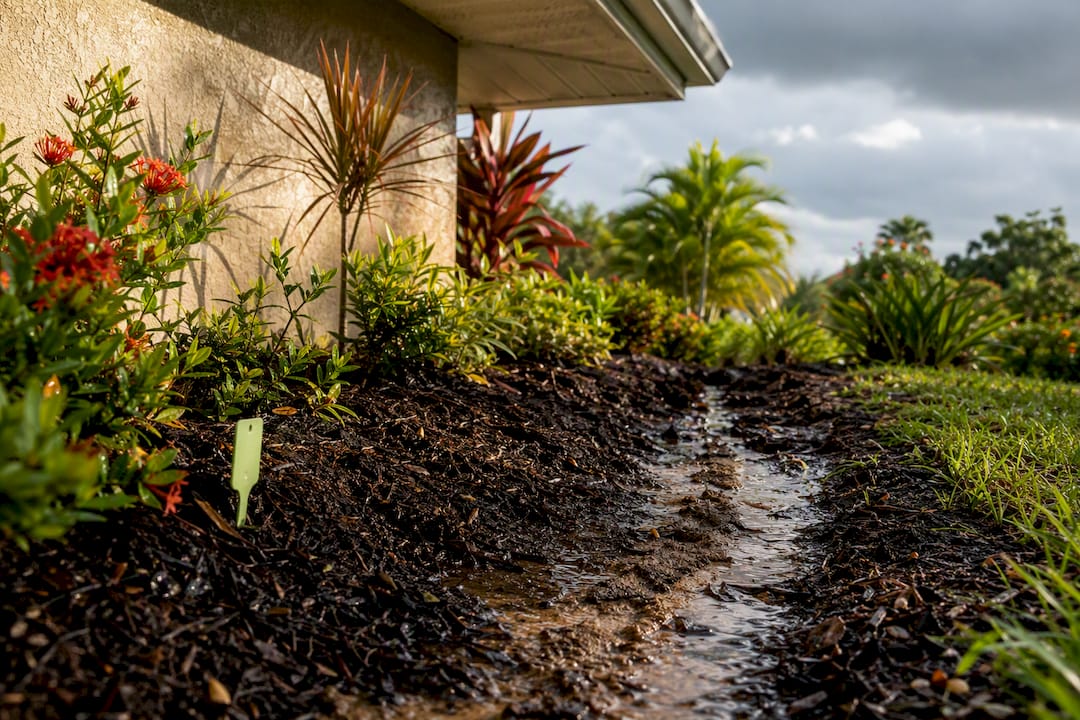
This matters for curb appeal more than people think. When downspouts discharge poorly, the signs show up fast. Mulch washes out. Soil splashes onto walls. Beds trench out under roof edges. Walkways stay muddy. In bad spots, pooling near the home can create pest issues and make the whole front elevation feel damp and neglected.
So when homeowners ask about gutter installation cost factors Florida contractors talk about, I always think beyond material and footage. Cost is not only about the gutter itself. It is also about where the water goes when it leaves the downspout. A color upgrade looks much better when the drainage plan keeps the landscape intact.
For homes with screened enclosures or outdoor living zones, gutter drainage for pool cages deserves special attention. Roof runoff that spills awkwardly near a cage, patio edge, or adjacent planting area can create erosion, splashback, or a persistent mess around spaces people use every day. Even when the visual focus is the front of the house, the back and side elevations need the same thoughtful drainage.
Gainesville style variety makes color choice more personal
One reason gutter color gets tricky in Gainesville is that there is no single neighborhood look. Even without getting into specific subdivisions, you see a mix of brick, painted siding, stucco, neutral palettes, darker accent colors, and roofs with different levels of visual texture. A choice that flatters one house may flatten another.
On a simple, light-colored exterior, a gutter that disappears into the trim can preserve a calm, tidy look. On a darker home, a close match may still work, but the finish can read much heavier simply because the surrounding colors are deeper. On a facade with strong horizontal trim already in place, matching the trim can emphasize order. On a facade with lots of busy elements, the same approach may create one stripe too many.
This is where standing in the driveway helps more than staring at online swatches. Step across the street. Look at the home at 8 a.m. And again in late afternoon if you can. In Florida, light changes how trim and metal surfaces read. What feels subtle in shade may look bright in full sun.
Metal roofs change the conversation
When homeowners discuss gutters for metal roofs Florida projects, the color question becomes even more important. Metal roofs often create a cleaner, more defined roofline than textured shingles do. That means the gutter becomes part of a sharper architectural edge.
With a metal roof, matching the roof can create a sleek, continuous line if the wall color and trim support it. Matching the fascia can also work, particularly if you want the roof to stand apart as its own visual plane. The wrong color tends to look more obvious on a metal-roofed home because the geometry is usually cleaner and the transitions are easier to see from the street.
This is also a place where performance should stay front and center. Whatever the roof material, Florida weather demands reliable drainage and routine maintenance. If the roof edge looks crisp but the gutter system clogs or overflows, curb appeal fades quickly.
Maintenance affects appearance more than the original color
Homeowners sometimes chase the perfect shade when the real problem is neglect. A gutter that was beautifully matched on installation can look tired after debris buildup, staining, or sagging. In Florida’s humid, storm-prone conditions, routine upkeep matters.
Leaf litter and debris can contribute to drainage problems, and that damage often shows up visually before people realize what is happening. A small overflow can leave dirty splash marks. A clogged corner can push water into a planting bed hard enough to carve a little channel. Once that starts, even an attractive color choice loses its effect because the eye catches the mess first.
This is where the question of DIY gutter cleaning or hire a pro becomes practical rather than philosophical. Some homeowners are comfortable checking accessible sections and keeping an eye on obvious debris. Others have taller rooflines, awkward slopes, or simply do not want to deal with ladders and wet buildup. There is no one answer that fits every home. What matters is honest judgment. If reaching the system safely is questionable, or if the gutters are already showing drainage issues, hiring help is often the smarter call.
Searches for gutter cleaning Dunnellon FL, gutter repair Hawthorne FL, gutter guards Mount Dora FL, or seamless gutters Williston FL may happen in different towns, but the underlying concerns are familiar across Florida. People want a gutter system that looks neat, handles rain, and does not become a recurring headache.
Seamless appearance matters because seams draw the eye
Even when homeowners are focused on color, the style and fit of the system still influence curb appeal. Clean lines always help. From the street, what makes a gutter look expensive is not usually the color alone. It is the overall neatness of the run, the way corners meet, the absence of visible waviness, and how naturally the profile sits against the fascia.
That is one reason seamless systems tend to get attention in conversations about appearance. The visual line is simpler. There is less interruption. And on a home where the goal is a crisp roof edge, that uninterrupted look can make the color choice feel more refined.
Still, seamless or sectional, the gutter only looks good if it is aligned properly and drains correctly. A perfectly matched gutter that holds water or overflows in every summer storm will not stay attractive for long.
HOA rules can shape the color options
Some Gainesville-area homeowners have complete freedom over exterior changes. Others do not. If a property sits under an association, exterior appearance standards may affect gutter color and style decisions. Florida law gives associations authority over exterior appearance standards, including color and style specifications for certain exterior items, while those standards must still comply with the building code and cannot be used to deny conforming installations outright.
The practical takeaway is simple. If you are in an HOA or any community with architectural review, check first. Do not assume your preferred bronze, white, or custom trim match will be automatically approved just because it is common elsewhere. It is much easier to adjust a color sample than to deal with a correction notice after installation.
That review process can actually help narrow the choice. Once you know the approved range, you can focus on which option best suits your roofline instead of debating every possible finish.
When color should disappear, and when it should speak up
There are a few reliable patterns I have noticed over time.
If the home already has enough visual activity, let the gutter disappear. Homes with varied roofing, bold shutters, strong masonry textures, or prominent landscaping usually benefit from restraint at the roof edge. Matching trim or fascia often gives the cleanest result.
If the home feels flat from the street, a slightly deeper gutter color can help define shape. This is especially true when the windows, door hardware, or porch accents already bring in that darker note. Then the gutter looks coordinated rather than random.
If the front facade is short and wide, an overly bright gutter can exaggerate that width. If the house is taller and more vertical, a deliberate horizontal line can sometimes balance the proportions. These are subtle effects, but they matter. Good curb appeal is often a game of small adjustments rather than one big statement.
A practical way to choose without overthinking it
Before locking in a color, walk through these questions:
- What do you want people to notice first, the roofline, the trim, or the whole house?
- Is the current issue that the exterior lacks definition, or that it already feels too busy?
- Will the downspouts land in places where they can direct water toward lawn or planting areas rather than near the foundation?
- Are there HOA appearance standards that narrow the options?
- Who will handle cleaning and upkeep, and how easy will that be over time?
That little exercise prevents a lot of regrettable choices. It pulls the decision back to the house itself instead of to whatever finish happened to look good on a tiny sample strip.
Color only works when the whole system stays healthy
Florida homes benefit from a simple, repeatable maintenance rhythm. Not because every house needs constant attention, but because heavy rain and organic debris do not wait for a convenient season. A year-round gutter checklist Florida homeowners can actually follow should be realistic, not obsessive. Look at the system after major storms. Watch where downspouts send water. Notice whether beds are washing out or water is lingering too close to the home. Catching small issues early preserves both function and appearance.
Gutter guards can help in some situations, but they are not magic. They may reduce certain types of debris buildup, yet the system still needs occasional inspection. That is especially true in leafy areas or where roof runoff carries fine material. Homeowners considering gutter guards Mount Dora FL or anywhere else in the state are usually trying to reduce maintenance, which is fair. Just keep expectations grounded. A lower-maintenance gutter is not the same thing as a maintenance-free gutter.
Likewise, repairs should not be delayed because the issue looks minor from the ground. A small misalignment or leak can leave visible marks, stress nearby soil, and take the shine off an otherwise well-kept exterior. If a section is loose, overflowing, or no longer directing water where it should go, timely gutter repair Hawthorne FL or in any similar Florida market is usually money better spent than repeated cosmetic fixes around the problem area.
The best gutter color is the one that makes the house look settled
That word, settled, is the one I come back to. A good gutter color makes the home look complete, as if the roof edge belongs exactly where it is and the whole exterior was thought through at once. It does not distract. It does not fight the trim. It does not create a bright stripe no one intended. It quietly supports the architecture.
In Gainesville, that choice carries extra weight because gutters are not decorative extras. They are part of how the home handles real weather. They guide water away from the house, help protect the landscape, and keep the edges of the property from looking washed out and worn. When the color is right and the drainage is right, curb appeal improves in a way that feels effortless.
That is usually the sweet spot. Not flashy. Not fussy. Just a house that looks sharper from the street and works better in the next summer storm.
❧