October 19, 2026
Gutter Guard Installation in Clermont FL: Understanding Brush, PVC Cover, and Reverse-Curve Designs
By @guttersguide918
Anyone who has spent a few summers in Central Florida knows how quickly a calm afternoon can turn into a hard, soaking storm. Clermont sits in the middle of a climate pattern that brings frequent warm-season thunderstorms, high humidity, and a wet season shaped by sea breezes and tropical moisture. That matters more than most people realize when they start comparing gutter guards.
A gutter guard is not just a product on a shelf. It is part of a drainage system that has to deal with intense rainfall, wet leaf matter, pine needles, small twigs, acorns, and the kind of sticky organic debris that behaves very differently in Florida than it does in a drier state. A guard that looks fine in a showroom can struggle once it spends a season under live oaks and summer storms.
That is why the conversation in Clermont should be practical. Homeowners do not need a fancy pitch. They need to understand how the most common guard styles actually behave on real houses, in real rain, with real debris. Brush guards, PVC covers, and reverse-curve designs each have strengths, weak points, and maintenance demands. None of them are magic. All of them make more sense when you look at rooflines, tree cover, rain intensity, and how much upkeep you are realistically willing to do.
Why the Florida setting changes the decision
In some parts of the country, a gutter guard mostly deals with dry leaves in the fall and snow in the winter. Clermont is different. Warm-season storms can dump heavy rain in a short window. Tropical disturbances can add another layer of stress. North and Central Florida also deal with year-round moisture, which changes how debris breaks down. Leaves do not always stay crisp and easy to brush away. They get damp, soften, compact, and mix with grit from shingles and the roof surface.
That matters because a guard has two jobs at once. It needs to block or reduce debris entry, and it needs to keep water moving into the gutter rather than over the edge. Some designs are better at one job than the other. Some work fairly well until debris starts matting on top. Some are easy to remove and clean but need that cleaning more often than homeowners expect.
I have found that many problems blamed on “bad gutters” are really a mismatch between the guard style and the site conditions. A home under pines deals with one kind of maintenance. A home shaded by oaks deals with another. Acorns, small limbs, leaf fragments, and pine needles all create different failure points. UF and Florida stormwater guidance also make another point worth remembering: once plant debris starts clogging drainage paths, it is not just a nuisance. It can interfere with runoff and contribute to downstream problems. Good gutter maintenance Florida homeowners invest in is partly about the house and partly about keeping water where it belongs.
Start with the gutter itself, not just the guard
Before comparing guards, it helps to back up and look at the base system. A guard cannot fix a poorly pitched run, a damaged section, or undersized drainage. If the gutter is pulling away from the fascia, holding standing water, or already overflowing in a normal storm, adding a cover on top will not solve the core issue.
This is where a seasoned gutter contractor Central Florida homeowners trust usually starts. The first question is not “Which guard do you want?” It is “How is your current system performing?” On older homes, gutter repair Gainesville FL and nearby service calls often reveal sagging sections, loose fasteners, clogs at downspout outlets, or joints that leak during heavy flow. The same pattern shows up in gutter cleaning Leesburg FL jobs, where the visible debris is only part of the problem.
If the gutter itself is due for replacement, it can make sense to think about guards at the same time as seamless gutter installation Leesburg FL or seamless gutters Gainesville FL work. A new seamless system reduces leak points compared with sectional pieces, and that gives any guard design a better foundation. It is easier to judge a guard fairly when the trough below it is properly installed and draining as intended.
Brush guards, simple idea, mixed results
Brush guards are easy to picture because they look like long cylindrical brushes that sit inside the gutter. Water is supposed to flow through the bristles while larger debris stays on top or gets trapped before it can clog the trough.
The appeal is obvious. Brush guards are straightforward. They do not require the same kind of fixed cover profile that more engineered systems do, and they can seem like a quick answer for homeowners who are tired of scooping out leaves. In light debris conditions, they can reduce the amount of large material settling into the gutter bottom.
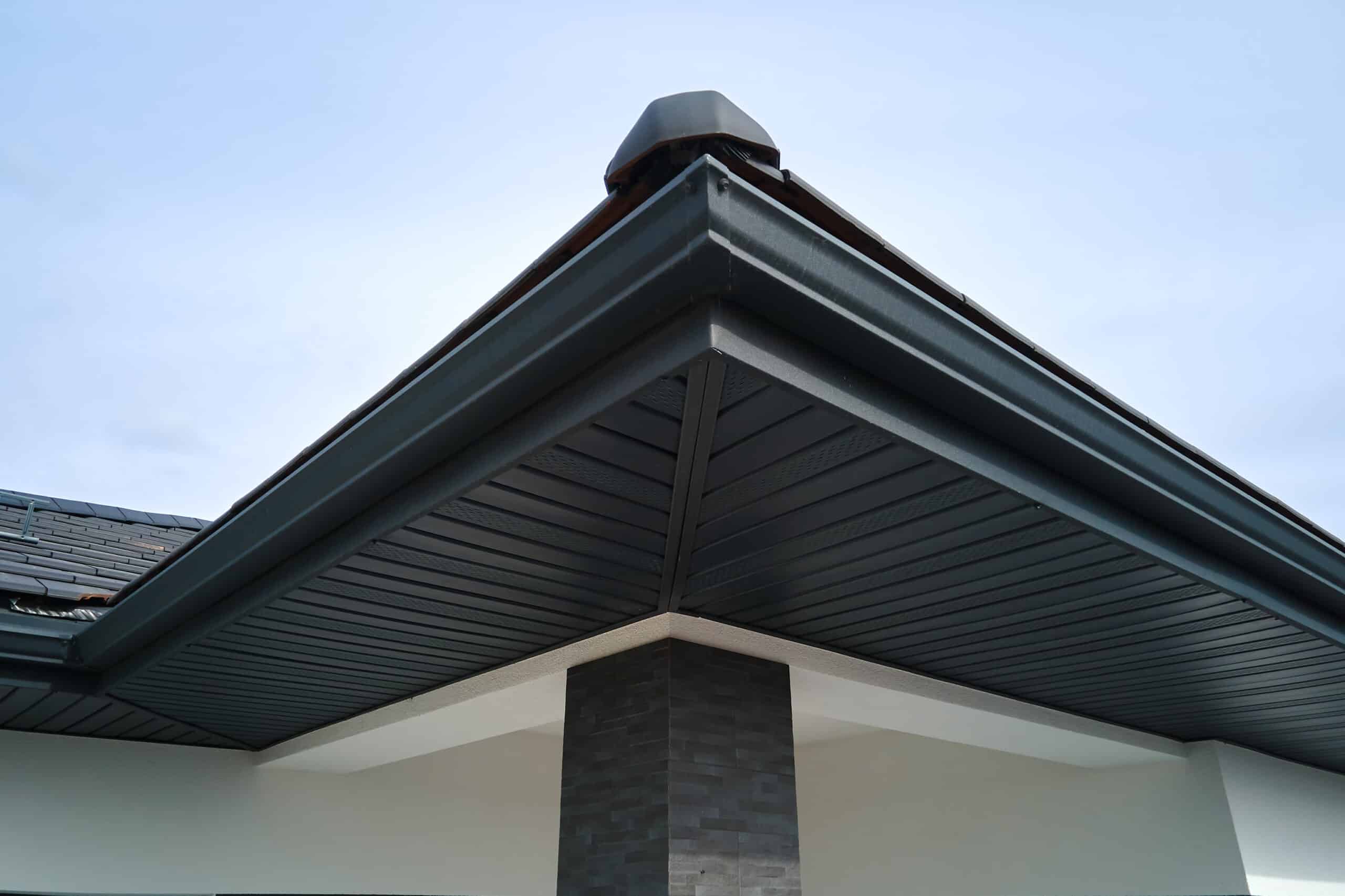
In Clermont, though, the question is not whether a brush can stop a big leaf. The question is what happens after weeks of humidity, repeated rainfall, and a steady mix of leaf fragments, pine needles, and small twigs. That is where brush systems often become a compromise rather than a solution. Fine debris can lodge within the bristles. Wet organic matter can cling instead of shedding away. Once that material starts to collect, the brush itself can become the thing that holds moisture and catches more debris.
That does not mean brush guards are useless. They can still fit certain situations, especially where a homeowner understands that the guard is reducing some maintenance, not eliminating it. A person who already expects to inspect their gutters regularly may appreciate the simplicity. In low-tree areas, they may perform acceptably for a while. But on homes with nearby oaks or pines, I would not treat brush guards as a low-maintenance answer.
One thing I often tell people is this: if you dislike the idea of ever pulling material out of a gutter again, brush guards are probably not your style. They are more of a debris moderator than a set-it-and-forget-it system.
PVC cover guards, budget-friendly but sensitive to conditions
PVC cover guards are another style homeowners encounter because they are lightweight and often pitched as a practical way to keep large debris out. The general concept is a plastic cover that spans the gutter opening while allowing water to pass through or around the design, depending on the model.
On paper, the logic is decent. A physical cover can block leaves and branches from falling directly into the trough. It can also create a cleaner top profile than a fully open gutter. For homeowners comparing options during gutter installation North Florida projects, PVC products can look attractive because they appear less complicated than some premium systems.
The catch is performance under real rain and debris load. Plastic components can be less forgiving in harsh sun and weather exposure over time, though the exact lifespan depends on the product and conditions. More importantly for Clermont, a cover has to manage sudden, heavy summer downpours. If the water entry path is too limited or if debris mats across the top, the system can struggle during peak flow. Once water starts overshooting, the whole point of the gutter is undermined.
PVC covers also need to be judged by the trees around the home. Large leaves may stay out reasonably well, but smaller debris often finds weak spots or builds up on top. Pine needles are especially worth thinking about because they have a way of sneaking into places that broad leaves do not. A guard that handles one kind of debris nicely may still require regular attention when fine material is involved.
I have also seen homeowners assume a cover means no cleaning at all, then get frustrated when the top surface collects a layer of damp organic matter. In Florida humidity, surface buildup does not always dry out and blow away. Sometimes it sits there, traps more moisture, and starts the next cycle.
PVC cover guards can make sense where budget is tight and tree debris is moderate rather than severe. They are easier to understand than some more technical systems, and for the right home they may be a reasonable middle ground. But they should be chosen with realistic expectations.
Reverse-curve designs, strong concept with important caveats
Reverse-curve guards are among the better-known gutter protection concepts. The design uses surface tension to help water follow the curve into the gutter while leaves and larger debris are meant to slide off the edge. When they are working well, they can be effective at rejecting bigger debris while still directing runoff into the trough.
This is the style many homeowners remember from demonstrations. A salesperson pours water over the edge, the flow hugs the curve, and the leaves fall away. That basic principle is legitimate. The question, again, is how it behaves in field conditions rather than in a perfect demo.
In Clermont and surrounding parts of Central Florida, reverse-curve systems face two recurring tests. The first is heavy rainfall intensity. A system has to deal with fast-moving sheets of water during summer thunderstorms, not just a garden hose. The second is surface debris accumulation. If small material builds up at the edge or on the front lip, performance can change. Pine needles, tiny leaf fragments, and go to the site gritty roof runoff can complicate the clean water-flow picture shown in marketing materials.
That said, reverse-curve guards often make more sense than people think on homes with substantial leaf drop, especially if the roofline and gutter layout are compatible and the installer knows what they are doing. Installation quality matters here. The angle, alignment, and relationship to the roof edge affect how water enters the gutter. This is not a category where sloppy fitting should be brushed off.
They also have a visual presence. Some homeowners do not mind that. Others notice the profile from the ground and decide aesthetics matter more than they expected. That is a fair concern. Gutters are a functional system, but they are still attached to the face of the home.
For many homeowners, reverse-curve designs are best understood as a higher-commitment solution. They can reduce the frequency of internal clogging, but they still need inspection. They are not immune to debris buildup, and they are not automatically the right answer for every roof, every tree canopy, or every budget.
A practical way to compare the three
When people feel stuck between product categories, I tell them to compare the maintenance style, not just the sales claims. Each design asks something different from the homeowner.
- Brush guards tend to be simple but often trap fine, wet debris within the gutter.
- PVC cover guards can block larger debris, but performance depends heavily on rainfall intensity and surface buildup.
- Reverse-curve systems can shed bigger material well, yet they rely on precise installation and still need periodic inspection.
- None of the three eliminate the need for gutter cleaning and repair Ocala FL, Clermont, Leesburg, Gainesville, or anywhere else in this climate.
- The best choice depends on tree type, roof layout, rainfall exposure, and how hands-on you are willing to be.
That last point is the one people skip. If a homeowner wants the lowest possible interaction with the system, that rules out some options right away. If someone does not mind occasional upkeep and wants a lower-cost starting point, the decision may land elsewhere.
Tree cover tells you more than product brochures do
One of the fastest ways to narrow down a gutter guard choice is to walk the property and look up. What hangs over the roof matters more than any slogan.
Live oaks drop leaves and acorns that can build up in gutters and drainage areas. Pine needles create a finer, more persistent kind of clogging. Small limbs and mixed yard debris add another layer. Florida landscapes are beautiful, but they are not gentle on open drainage systems.
A home with minimal overhang and little nearby tree debris has more flexibility. In that setting, even a modest guard may cut down on maintenance enough to feel worthwhile. A home shaded by multiple mature trees needs a more cautious approach. The wrong product may simply relocate the clog from inside the gutter to the top of the guard, or trap it in a way that is harder to clean.
I remember one homeowner who assumed their problem was the age of the gutter system. The real issue was a dense mix of oak debris and pine needles collecting at transition points. After cleaning, the gutters performed much better, but the guard discussion changed entirely because the debris profile was now obvious. They did not need the cheapest option. They needed the option that would fail least badly under messy, wet conditions.
That is a phrase worth sitting with: fail least badly. Gutter protection is often about managing imperfection, not chasing perfection.
Installation quality matters as much as the product
People naturally focus on the guard design because it is easier to compare products than workmanship. But improper installation can make a decent guard behave poorly.
A well-installed system starts with sound gutters, secure fastening, proper pitch, and clear downspouts. Then the guard has to be fitted in a way that matches the roof edge and allows water to enter as intended. Gaps, bad angles, and loose sections create shortcuts for debris and opportunities for overflow.
This is where local experience matters. A gutter contractor Central Florida homeowners hire regularly sees how heavy summer rain behaves on actual homes in the area. The same goes for teams handling seamless gutters Gainesville FL or gutters The Villages FL projects. They are not guessing about climate. They are watching what survives repeated thunderstorm seasons and what comes back as a service call.
Installation quality is also why mixing old and new components should be done carefully. If part of the gutter system is worn out, trying to add a guard on top can be false economy. Sometimes the better long-term move is replacing damaged sections, improving the drainage path, and then adding protection.
Where homeowners often misjudge maintenance
The biggest misunderstanding around gutter guards is not about engineering. It is about expectations. People hear “guard” and think “no more cleaning.” In Florida, that is rarely how it works.
A more accurate expectation looks like this:
- Guards can reduce the amount of debris entering the gutter.
- Guards can change how often cleaning is needed.
- Guards still require inspection, especially after stormy periods.
- Guards do not fix damaged gutters, blocked downspouts, or poor drainage design.
- Guards work best as part of regular gutter maintenance Florida homes already need.
That last piece matters because storms do not care what product is attached to the roofline. If a branch drops, if a clump of wet debris shifts, or if a tropical rain event tests the flow rate, the system still needs attention. Even the best guard is part of a drainage routine, not a substitute for one.
Clermont homeowners should think seasonally
A smart gutter plan in Clermont is seasonal. Before the wet season ramps up, the system should be checked for blockages, loose sections, and any visible buildup. During active summer weather, quick visual checks after strong storms can catch overflow patterns early. If water is spilling over the front edge or pouring behind the gutter, something is wrong and it is better to deal with it before fascia boards or landscaping pay the price.
Homes being prepared for seamless gutter installation Leesburg FL style upgrades or gutter guard installation Central Florida services often benefit from this same mindset. Instead of treating the project as a one-time purchase, think of it as a way to improve the house’s storm-readiness. A cleaner, more efficient drainage path means less standing water where it should not be and fewer surprises during the months when rain becomes a routine event.
The same logic applies farther north. Whether someone is comparing gutter guards Gainesville FL options, planning gutter repair Gainesville FL work, or booking gutter cleaning Leesburg FL service, the weather pattern is pushing the same basic lesson. Water management is not optional here. It is part of owning the home.
So which design usually makes the most sense?
There is no honest one-size-fits-all answer, and that is exactly why homeowners should be skeptical of hard sales lines.
Brush guards are easiest to understand and may suit owners who do not mind periodic cleanup and have relatively moderate debris conditions. They are not ideal where fine, wet material is constant.
PVC cover guards can be a reasonable entry point for some homes, particularly where large debris is the main concern and the owner wants a basic covered system. They need a realistic look at local rainfall intensity and the possibility of buildup on top.
Reverse-curve designs tend to be the most conceptually robust of the three when it comes to shedding larger debris, but they ask more from installation quality and should be chosen with attention to roof geometry, rain behavior, and appearance.
If I were advising a Clermont homeowner face to face, I would not start by naming a favorite category. I would ask what trees are over the house, how the current gutters perform in a summer storm, whether the system is old or recently replaced, and how often the owner is willing to inspect or service it. Those answers usually point to the right direction faster than any brochure does.
A well-chosen guard can absolutely improve a home’s drainage performance and cut down on mess. It just works best when paired with solid gutters, realistic maintenance habits, and an understanding of how Central Florida weather really behaves. That is the difference between a product that sounds good and a system that actually holds up through the rainy season.
❧